
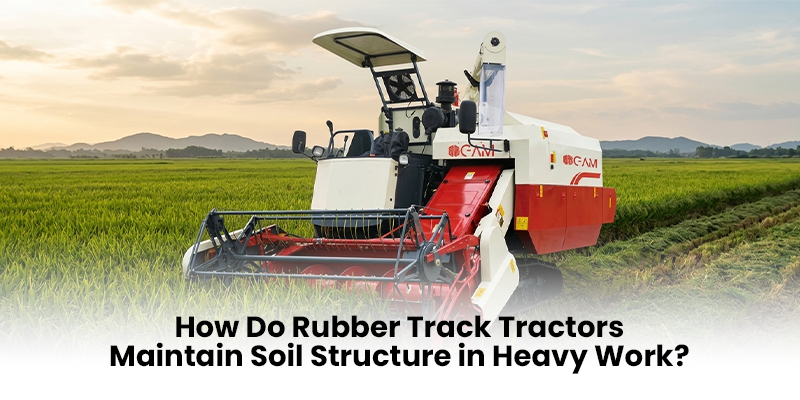
Wet soil and heavy machinery are a bad combination. Everybody knows that. The fields are soaked, the ground is soft, and getting the work done feels like a battle before it has even started. Anyone who has watched a wheeled tractor spin itself deeper into a waterlogged field knows exactly how that day ends. The rubber track tractor is precisely for that moment. Not to fight the ground, but to work with it.
Why Does Soil Compaction Happen in the First Place?
Think of soil like a sponge. It needs air pockets and spaces to hold water, support roots, and allow nutrients to pass through. When heavy machinery rolls over it repeatedly, those spaces collapse. The sponge gets squeezed flat. The worst of it happens before the machine has even finished its first run across the field.
That first pass does more damage than most people expect. Wheeled tractors push the machine’s full weight onto small contact patches. The narrower the tyre, the more pressure on a small patch of ground. This builds up a hard layer beneath the surface that roots simply cannot push through. Yields fall, drainage suffers, and the farmer gets less back for the same amount of work.
You May Like: Common Mistakes to Avoid When Operating a Multi-Crop Combine Harvester
So, Does Using a Rubber Track Tractor Reduce Soil Compaction Compared to Wheeled Tractors?
Yes, quite noticeably. The rubber track works like snowshoes. Snowshoes spread a person’s weight across a wider area so they don’t sink into the snow. Rubber tracks work the same way. The weight spreads out, ground pressure drops, and the soil underneath stays intact. Those air pockets and drainage channels survive, and crops planted later have a much better chance.
How Does a Rubber Track Tractor Help Protect Soil Structure During Heavy Field Work?
Ploughing, tilling, and harvesting with full grain tanks all put serious pressure on the ground. Wheeled tractors in these conditions often lose traction and start spinning, which grinds the topsoil, mixes layers that should stay separate, and leaves ruts that take seasons to recover from.
Rubber tractors grip cleanly without spinning. The contact is firm and consistent, which means less slippage and less churning. The soil stays in much better shape after the machine has passed. These tractors also leave a shallower impression on the ground, which protects nearby roots from getting torn or compressed during heavy work. Here is what that actually looks like in the field:
- Tracks spread the load evenly, keeping ground pressure low even when carrying heavy harvesting equipment.
- Wet or waterlogged soil does not compact deeply because the machine is essentially floating over it rather than pushing into it.
- The topsoil layer does not get sheared off or disturbed the way it does with tyre sli.p
Why Do Farmers Choose a Rubber Track Tractor for Heavy Work on Soft or Wet Soil?
Wheels fail when it matters most. When the ground is soft, and the harvest cannot wait, a spinning tyre is the last thing a farmer needs. It is costly in time, fuel, and sometimes crop loss. Rubber tracks keep the machine moving, the operator in control, and the work on schedule. For farmers working on wet or heavy soils, this is reason enough. Here is what changes once they make the switch:
- Fewer days lost to machinery getting stuck or needing to be towed out
- More consistent output during wet seasons when the weather window is tight
- Less frustration for the person operating the machine because the ride is smoother and more predictable
What Makes a Rubber Track Tractor Better for Maintaining Soil Health in Tough Field Conditions?
Soil does not go bad overnight. It happens slowly, season after season, and most farmers only notice when the harvests start to drop. By then, the compaction has been building for a while. It does not go away without the right machinery on the ground.
A rubber-track tractor helps because it exerts less pressure on the ground as it moves across the field. Less compaction means water enters properly, roots grow better, and the soil stays workable throughout the season.
It is not a dramatic change. It just shows up quietly, season after season, in fields that keep getting easier to work.
Summing It Up
The heavier and wetter the soil, the stronger the case for tracks. Compaction does not go away on its own. Neither does poor drainage. These are problems that get worse every season you ignore them.
So, can a Rubber Track Tractor handle heavy loads without damaging the soil? It can. The wider the contact, the lower the pressure, and the soil stays in far better shape as a result. If your fields are softening and yields are slipping, it is time to act. Your farm needs a rubber track tractor from Godabari Agro. Contact us and get yours today.
Frequently Asked Questions
- How long does it take for compacted soil to recover?
Compacted soil can take several seasons to recover, and without a change in machinery or farming practice, it rarely improves on its own.
- Does a rubber track tractor work well in dry conditions, too?
Yes, rubber tracks perform well in both wet and dry conditions, making them a reliable choice across seasons, not just during the wet months.
- Is a rubber track tractor harder to maintain than a wheeled tractor?
Rubber track tractors are generally straightforward to maintain and, in most cases, need less frequent attention than wheeled tractors that regularly work on heavy or wet ground.