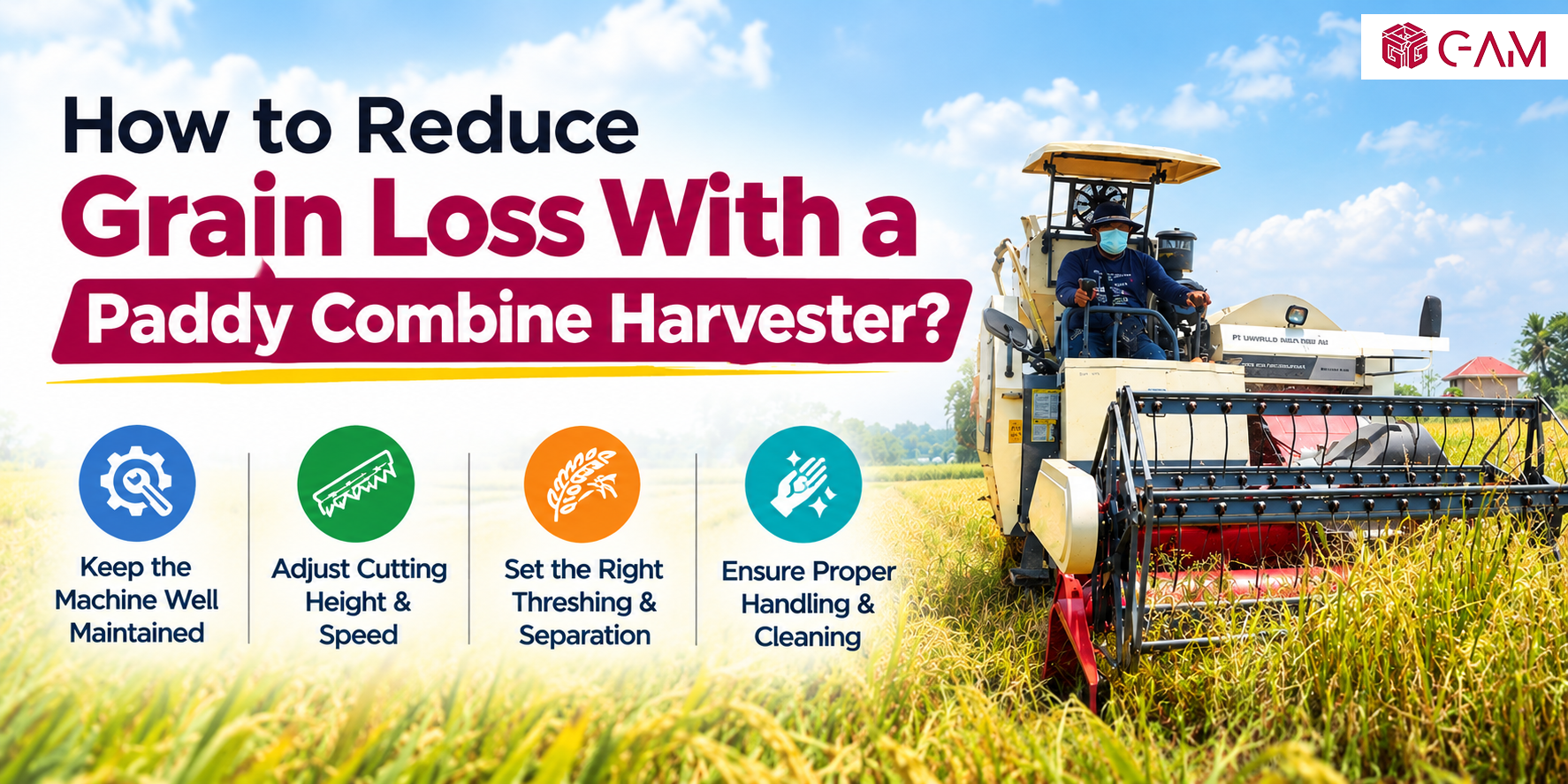
To reduce grain loss with a paddy combine harvester, keep a steady speed, set the machine to suit your crop, and harvest only when the grain is ready. Most losses come from small habits that are easy to fix, and the right machine makes them easier to control. At Godabari Agro, we offer the paddy combine harvester built to keep these losses low.
After the harvester has passed, take a walk along the field and look at the stubble. Those few grains lying on the ground may not look like much, but they add up across every acre. The good part is that the cause can usually be found and corrected.
Table of Contents
- Where Does a Paddy Combine Harvester Lose Grain During Harvest?
- What Machine Settings Help Reduce Grain Loss in Paddy Harvesting?
- When Is the Right Time to Harvest Paddy to Avoid Shattering Losses?
- How Should You Operate a Paddy Combine Harvester in Lodged or Wet Fields?
Where Does a Paddy Combine Harvester Lose Grain During Harvest?
A paddy combine harvester loses grain at four stages: the front cutting area, the threshing drum, the separation area, and the cleaning section. Our team at Godabari Agro can help you choose a machine that suits your field.
Grain loss in paddy harvesting rarely happens all at once. It adds up in small amounts along the way:
- At the Front: Grains fall when the crop is cut roughly, or the reel hits the panicles too hard.
- Inside the Drum: Threshing that is too gentle leaves grain on the stalk, while threshing that is too harsh cracks it.
- During Separation: Good grain gets carried out the back with the straw.
- At Cleaning: Strong wind blows healthy grain away with the chaff.
What Machine Settings Help Reduce Grain Loss in Paddy Harvesting?
The key combine harvester settings for paddy are a steady speed, sharp blades, a gentle reel, the right drum speed and gap, and carefully adjusted sieves and fan. Our team at Godabari Agro can help you choose a machine that makes these adjustments easy.
Driving too fast overloads the machine and pushes unthreshed grain out the back. Match the drum speed and gap to your paddy variety and its moisture. Change the sieves and fan in small steps, and check the grain sample after each change. These small adjustments help reduce harvest loss paddy farmers often face every season.
Planning to buy or upgrade your paddy harvester?
Read this before you decide: Future Price Trends of Paddy Combine Harvesters in India
When Is the Right Time to Harvest Paddy to Avoid Shattering Losses?
The right time to harvest paddy is when most panicles (the grain-bearing heads) have turned golden, and the grains feel firm, not milky. Cutting at this stage keeps shattering low and the grain easy to clean. At Godabari Agro, we suggest starting only when the grain passes this check, so your paddy combine harvester works on a crop that is truly ready.
See these paddy harvesting tips before starting the machine:
- Finger Test: Rub a few grains between the fingers. If they feel firm and do not squash easily, you are close.
- Morning Dew: Cutting while the crop is still damp makes cleaning tougher, so give it a few hours.
- After Rain: Hold off for a day or so, because wet stalks tend to jam the machine.
- Trial Patch: Harvest a small corner first. A quick look at the grain will tell you if the timing is right.
- Whole Field: Edges can ripen earlier, so check the middle before you start.
How Should You Operate a Paddy Combine Harvester in Lodged or Wet Fields?
When paddy has fallen over (lodged), or the field is wet and soft, a paddy combine harvester needs slow, gentle handling. Keep speed down, lower the cutter bar a little to pick up downed stalks, and avoid sharp turns. We at Godabari Agro know that tough fields put extra load on a machine, so our team can help you choose one that suits your field conditions.
Lodged paddy is a crop that has bent or fallen after heavy rain or wind. Cut in the direction that lifts the stalks instead of pushing them flat. Fallen stalks feed in slowly, so rushing only drops more grain on the ground.
In wet, muddy fields, drive smoothly so the machine does not sink, and check the sieves often because damp straw clogs them quickly. If the ground is too soggy, waiting a day is better than getting stuck halfway.
Get the Right Paddy Harvester at Godabari Agro
A good harvest is not only about how well the crop grew. It is also about how much of it reaches your storage. Steady speed, sensible settings, and patient timing make that difference, and a well-tuned paddy combine harvester helps protect your income instead of leaking it. Contact Godabari Agro for practical guidance on choosing the right machine. Small changes made today can mean a fuller storage room when the season ends.
Stay tuned for our next blog on how a simple pre-harvest routine can tell you if your machine is truly ready for the season.
Frequently Asked Questions
- What combine harvester settings for paddy matter most in reducing grain loss?
Ground speed, drum speed, and the sieve and fan adjustments matter most, and our team at Godabari Agro can help you choose a machine that makes them easy to adjust.
- When is the right time to harvest paddy to avoid shattering?
Harvest once most panicles have turned golden and the grains feel firm, after the morning dew has dried.
- How should a paddy combine harvester be handled in lodged or wet fields?
Drive slowly, lower the cutter bar slightly to lift fallen stalks, and clean the sieves often because damp straw sticks easily.