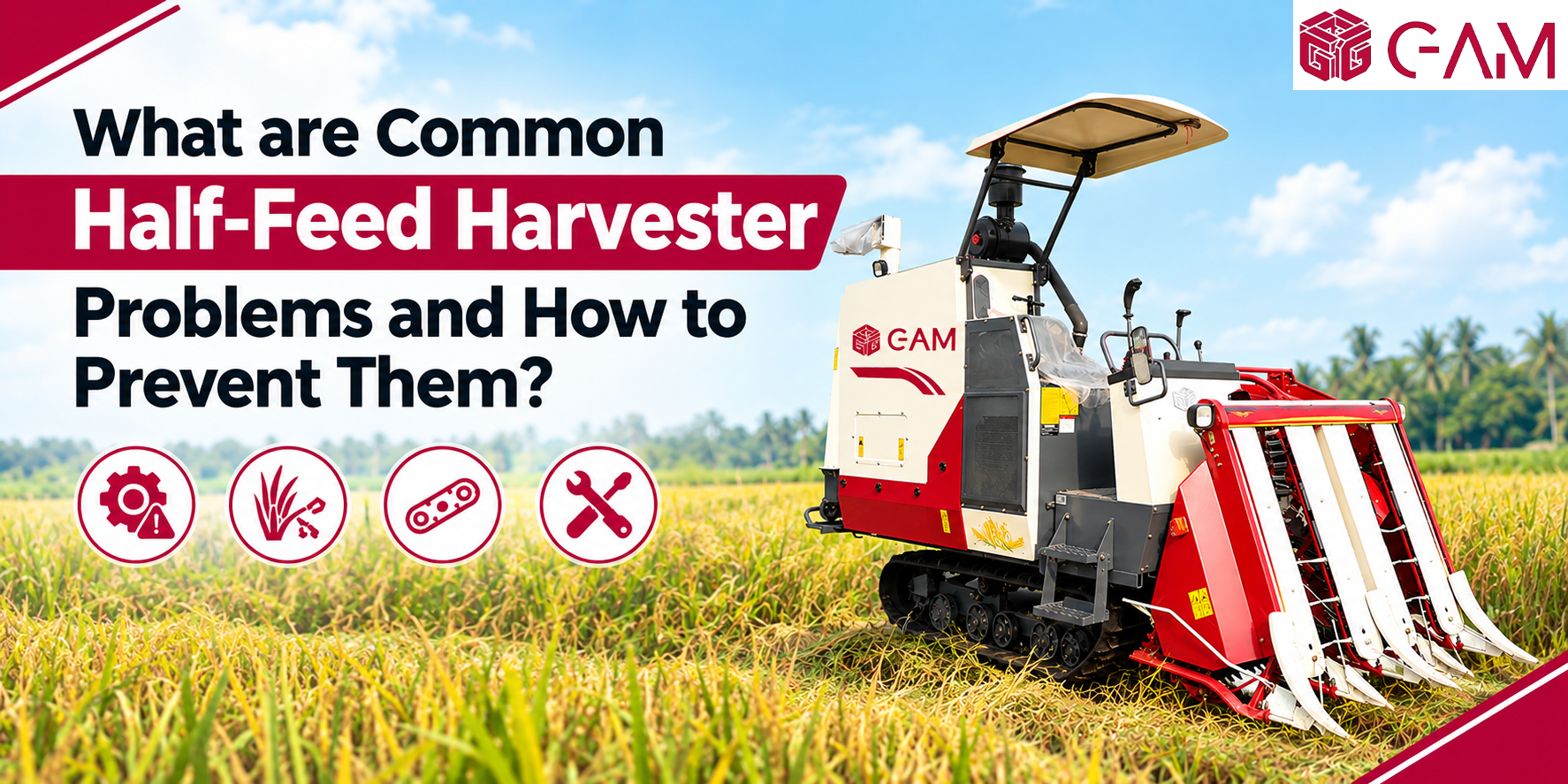
A half-feed harvester runs into trouble in a handful of predictable spots: the feeding path, the threshing drum, and the wear parts that quietly degrade with every acre. Most combine harvester breakdowns during peak season trace back to one of these three areas.
Catching the pattern early is what keeps a half-feed harvester in fields running through the season instead of sitting in the shed during the busiest week.
Table of Contents
- Why Does a Half-Feed Harvester Experience Grain Loss?
- What Causes Feeding Blockages During Harvesting?
- How Can You Improve Fuel Efficiency While Operating a Half-Feed Harvester?
- What Daily Inspections Should Be Performed Before Harvesting?
- When Should Worn Harvesting Components Be Replaced to Avoid Downtime?
Why Does a Half-Feed Harvester Experience Grain Loss?
Timing and settings are usually behind grain loss, not the machine itself. If you’re wondering how to reduce grain loss in half-feed harvester operations, start with harvest timing and drum settings before looking anywhere else. Harvest too early or too late, and it can affect how easily the grain comes off the stalk. Run the drum too fast or too slow, or set the concave wrong and the kernels won’t thrash out cleanly, or they’ll end up in the straw.
- Wrong Harvest Timing: Grain that’s too wet or overripe stretches poorly either way.
- Drum Speed Mismatched to Crop: Too fast damages grain, too slow leaves it unthreshed.
- Worn Concave Clearance: A gap that’s opened up over time lets grain slip through unprocessed.
What Causes Feeding Blockages During Harvesting?
Feeding blockages happen when crop material moves into the machine faster or more unevenly than the feed mechanism can handle it. Wet, tangled, or heavy-tillered crop is the most common trigger, since it doesn’t flow through the feed throat the way dry, upright stalks do.
Once blockage starts, it gets worse fast. Crop backs up at the intake, the drum slows further trying to process it, and the whole system stalls unless the operator catches it early and clears the feed path before it packs in tighter. If you are searching for half-feed harvesters not working properly, they all start right here, at the feed throat, since this is where the majority of mid-harvest stoppages begin.
How Can You Improve Fuel Efficiency While Operating a Half-Feed Harvester?
Fuel efficiency comes down to matching engine load to the actual harvesting conditions rather than running at one fixed setting all day. Running the machine too hard or at unnecessarily high RPM burns more diesel without adding anything to output.
- Match Ground Speed to Crop Density: You’ll use more fuel pushing through heavy crops at full speed than you will making steady, slower passes.
- Keep Filters and Injectors Clean: Clogged filters make the engine strain for no real reason. Clean ones keep it running the way it should.
- Avoid Unnecessary Idling: Idle time between passes adds up fast over a full harvesting day.
Read Next: What Does a Combine Harvester Cost Indian Farmers? A Complete Guide
What Daily Inspections Should Be Performed Before Harvesting?
A quick daily check before starting up catches most problems before they turn into downtime. Think of it as a short paddy harvester servicing guide you run through every morning, taking a few minutes and saving hours later in the day.
- Feed Throat and Drum: Whatever crop got left behind, clear it out before you start.
- Belts and Chains: Tug at them. If they feel loose or look frayed, deal with it now, not mid-harvest.
- Hydraulic and Engine Fluid Levels: Check the fluid. Low levels are behind most of the breakdowns that hit right in the middle of the day.
- Cutting Blades: If the blades are dull, everything downstream has to work harder. It’s worth checking.
When Should Worn Harvesting Components Be Replaced to Avoid Downtime?
Components should be replaced as soon as wear starts affecting performance, not after they fail completely. Waiting for a part to break usually means losing harvesting time at the worst possible moment.
Blades, belts, and concave components wear at different rates depending on how many acres they’ve covered and what crop conditions they’ve been run through. Keeping a rough log of hours or acreage per part makes it easier to replace on schedule instead of reacting to a breakdown mid-season.
Keep Your Half-Feed Harvester Running Through the Whole Season
Most half-feed harvester problems come back to the same root causes: timing, feed rate, and wear parts that didn’t get replaced soon enough. A short daily inspection routine, paired with a few basic half-feed harvester maintenance tips, catches nearly all of it before it becomes a bigger repair.
Contact Godabari Agro to get your half-feed harvester checked and set up correctly before the next harvesting cycle begins. A machine that’s properly maintained through the season is far cheaper than one that breaks down in the middle of it.
More tips on getting the most out of your half-feed harvester are coming up in our next blog. Don’t miss it.
Frequently Asked Questions
How often should a half-feed harvester be serviced?
A basic service check every 100 to 150 operating hours catches most wear issues before they turn into breakdowns, alongside the daily pre-harvest inspection.
Can a half-feed harvester handle both wet and dry field conditions?
Wet, waterlogged fields put more strain on the feeding and threshing system, so operators typically need to slow ground speed and clean the machine more often in those conditions compared to dry fields.
Does crop variety affect how a half-feed harvester should be set up?
Crop variety plays a real role here. Drum speed and concave clearance often need adjusting between crop types, since stalk thickness and grain size vary enough to change how cleanly the machine threshes.